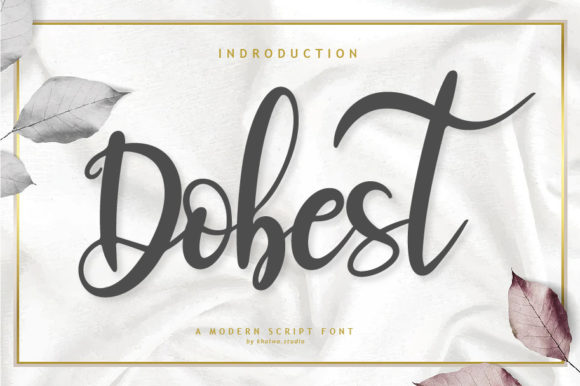
Dobest: A Timeless Handwritten Font
There I was, staring at a blank brand board, trying to find the right visual voice for a new boutique coffee shop. The client wanted something warm, approachable, and slightly whimsical. I had a few fonts in mind, but nothing felt quite right until I stumbled upon Dobest. It wasn’t just another script font—it had a personality that made me want to use it everywhere.
What Makes Dobest Unique?
Dobest Script is a lovely and timeless handwritten font that feels both modern and nostalgic. Each letter has a unique and beautiful touch, making it stand out from the sea of generic scripts. The strokes are soft yet deliberate, with subtle variations that give it a handcrafted feel. It’s not too ornate, but it’s not plain either. This balance makes it versatile for a range of branding applications.
When I first tested it on a logo concept, I was struck by how well it translated into different sizes and contexts. It worked beautifully as a headline, but also held its own as a tagline or subtitle. The font’s fluidity gave it a natural, organic feel that complemented the café’s cozy vibe.
Testing Dobest in Real Projects
I used Dobest on a packaging mockup for the coffee shop’s seasonal blends. The font added a personal touch that made the labels feel more authentic. On a business card, it brought a sense of warmth and creativity without being overwhelming. In social media graphics, it stood out as a strong visual element, drawing attention to key messages.
On a website header, Dobest added a nice contrast against a clean sans serif. It didn’t compete with the body text but instead provided a focal point that enhanced the overall design. In a poster for a local art event, it helped create a sense of movement and energy, perfectly matching the theme of the exhibition.
Strengths and Limitations
Dobest excels as a display font, especially in logo design and branding. Its handwritten style makes it ideal for creating a sense of intimacy and authenticity. It works best when used sparingly—too much of it can become distracting. For long body text, it’s not the best choice. The small details in the letters can make it harder to read at smaller sizes, especially in print.
It’s also important to consider the context. Dobest might not be the best fit for formal corporate branding where a more structured typeface would be preferred. However, for creative studios, handmade shops, or boutique brands, it’s a fantastic option that adds character and charm.
Font Pairing and Design Applications
Pairing Dobest with a serif or sans serif font can create a balanced and sophisticated look. A classic serif like Georgia or Baskerville can provide contrast while maintaining elegance. A modern sans serif like Montserrat or Lato can offer a fresh, clean backdrop that lets Dobest shine.
In editorial design, Dobest can be used for headings or pull quotes to add visual interest. In commercial design assets like product labels or signage, it brings a personal, artisanal quality that resonates with customers. For web design, it’s best used in hero sections or call-to-action buttons where it can make an immediate impact.
Practical Tips for Using Dobest
If you’re considering using Dobest in a project, test it in multiple contexts before finalizing your design. See how it looks on different backgrounds, in various sizes, and alongside other elements. Pay attention to how it affects readability and visual hierarchy.
Check the font’s available styles, ligatures, and alternates to see what options you have. Some script fonts come with multiple weights or swash variations that can add depth and variety to your designs. Also, make sure the font supports the languages you need, especially if your project involves multilingual content.
Before using Dobest in client work, review the commercial licensing terms. Ensure that the font is properly licensed for the intended use, whether it’s for print, digital, or merchandise. This will help avoid any legal issues down the line.
Overall, Dobest is a premium font that offers a unique blend of beauty and functionality. Whether you're working on a logo, a brand identity, or a social media campaign, it has the potential to elevate your design and leave a lasting impression. Just remember to use it thoughtfully and in the right context.